

In Lithuania, the number of Ukrainian war refugees has increased by 10 thousand, a trend of sedentism is observed
The number of Ukrainian war refugees living in Lithuania has increased by more than 10 thousand over the past year, according to the latest data from the Migration Department.
In addition, the available statistics allow us to assume that more and more Ukrainians who fled to Lithuania from Russian aggression are choosing to stay in our country rather than moving to other European countries or returning to their homeland.
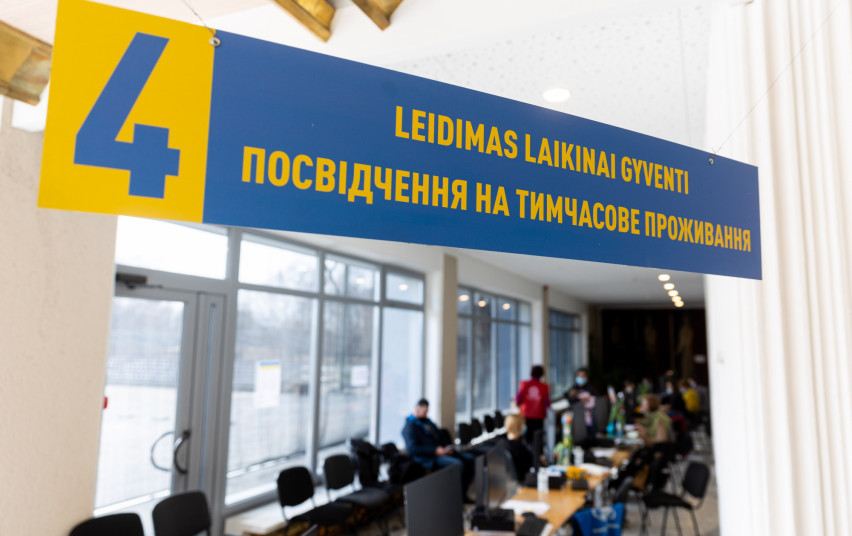
As every year, the Migration Department completed the replacement of digital temporary residence permits for Ukrainian war refugees based on temporary protection at the beginning of March and updated the number of such persons in our country.
As of March 5 this year, a total of 53,379 Ukrainian war refugees were living in Lithuania. Exactly one year ago, there were 43,071 such persons, and at the beginning of March 2024 – 39,468.
The European Union activated the temporary protection mechanism for Ukrainian war refugees on March 4, 2022. Initially, it was valid for one year and has since been extended several times. Currently, the digital permits held by all war refugees and their family members are valid until March 4, 2027.
This means that these documents, which grant the right to reside in Lithuania on the basis of temporary protection, must be renewed (extended) every year by persons who fled Russian aggression and are living in our country.
The latest data from this process show that this year more than 42,500 Ukrainians renewed such documents, while last year nearly 37,000 digital permits were replaced.
“Lithuania has unconditionally and firmly declared its support for Ukraine fighting for its freedom, so now we see that our country is becoming a safe and reliable haven for war refugees who have fled Russian aggression,” said Indrė Gasperė, Director of the Migration Department.
According to her, this statistics indicates that more and more Ukrainians are deciding to stay in Lithuania rather than return to their homeland or move to other European countries.
“Of course, the movement of war refugees has not stopped—Ukrainians are migrating quite actively—but the latest figures suggest that the majority of war refugees who arrived in Lithuania earlier and have been living here for at least a year are becoming more sedentary. These people are seeking to integrate more quickly or have already done so, learning the language, actively looking for and finding jobs, and some are even starting their own businesses. It is likely that such success stories reach, through their own channels, the relatives or acquaintances of refugees still in Ukraine who remain hesitant and undecided about leaving,” the head of the Migration Department reflects.
The Migration Department reminds that digital permits issued to persons who fled Ukraine due to Russian aggression can be printed or saved on smart devices.
Such a document confirms the holder's legal status in Lithuania and, with a valid citizen's passport, grants the right to travel to other Schengen Area countries.
Ukrainian war refugees who have not renewed their temporary residence permits in Lithuania may face difficulties in accessing certain health services, applying for social benefits, child allowances, requesting compensation for heating costs, hot or cold water, and similar services.
Since the beginning of Russia's invasion of Ukraine, more than 103 thousand war refugees have been registered in Lithuania's migration information system MIGRIS, but not all of these persons remained in our country. It is known that some Ukrainians came to Lithuania briefly, did not apply for temporary protection, and left for Western Europe; others returned to their homeland or stayed in Lithuania and obtained temporary residence permits on other grounds.
Last updated: 12-03-2026
Related news:
Updated List of External Service Providers: Cambodia Added
The EU Migration and Asylum Pact Enters into Force: A New Stage of Migration Management Begins
Discussion on Migration Issues Relevant to Belarusian Citizens Living in Lithuania
The Ambassador of the Kingdom of the Netherlands Visited the Migration Department
I. Gasperė appointed as Director of the Migration Department