

Asylum Specialists Trained at the Migration Department
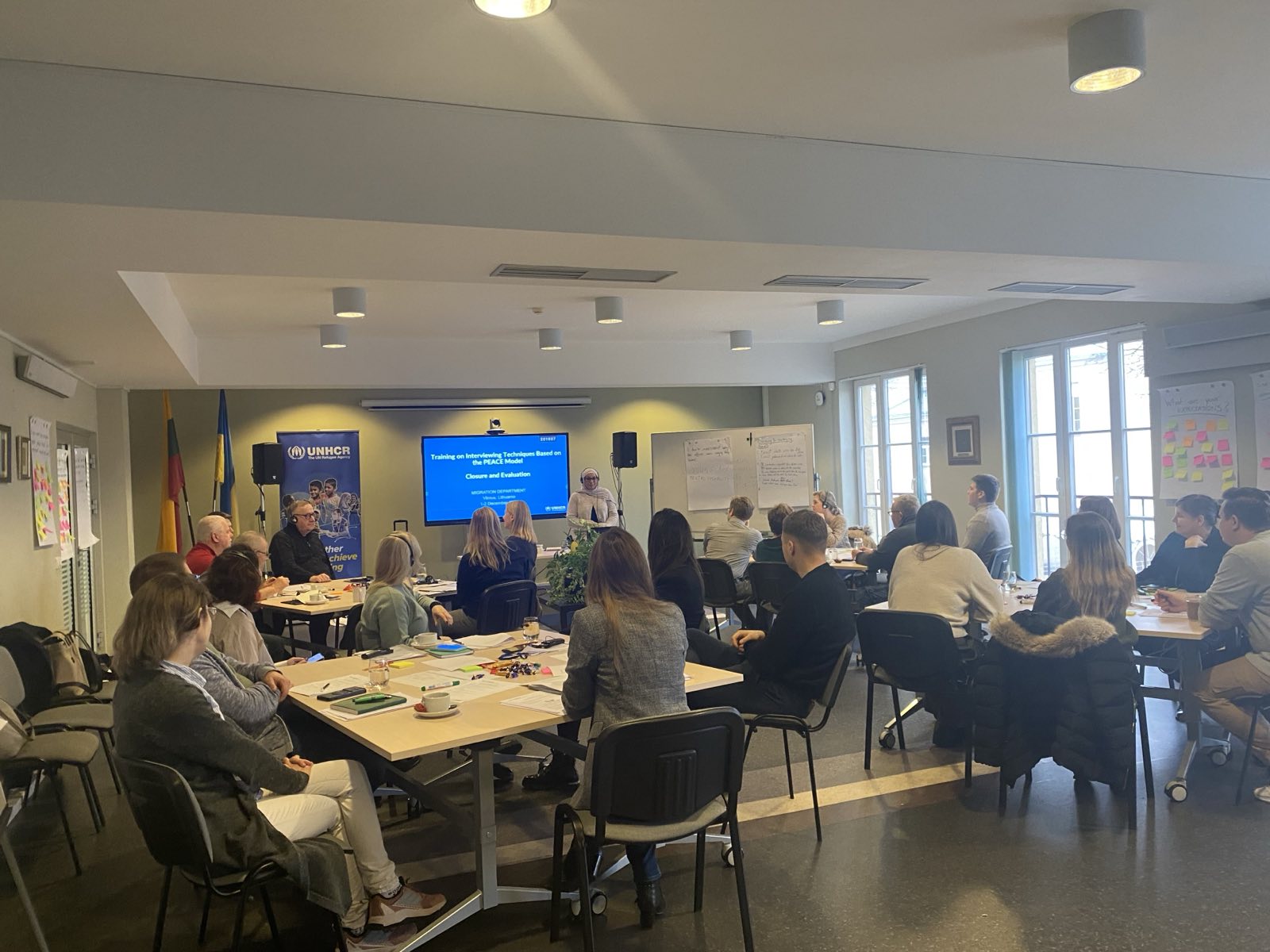
A two-day training session aimed at enhancing the competencies of Migration Department staff working with foreigners seeking asylum has concluded.
During the event, lecturers from the United Nations High Commissioner for Refugees (UNHCR) focused primarily on the proper and effective organisation of interviews with asylum seekers, as well as on key principles that later influence the adoption of high-quality and well-reasoned decisions.
“These trainings represent an important step in strengthening the competencies of our institution, ensuring that every asylum application is assessed objectively and humanely. This will help avoid biased errors and lead to more accurate and fair decisions in the various complex situations faced by our specialists examining asylum requests,” said Lucija Voišnis, Deputy Director of the Migration Department, currently performing the functions of the Director.
The training, attended by nearly thirty employees of the Migration Department, focused mainly on the so-called PEACE model – an international methodology that ensures a structured, respectful and effective conversation with vulnerable individuals.
On the first day of the training, participants were introduced to interview planning techniques, with emphasis placed on the importance of proper preparation. It was stressed that in such cases, building and maintaining a sense of mutual trust with the individual is particularly crucial.
“The aim of these trainings is to contribute to efforts to ensure high-quality asylum interviews, which in many cases determine the outcome of the asylum decision,” noted Renata Kuleš, UNHCR Representative for Relations with the Government of the Republic of Lithuania.
Migration Department specialists were reminded of the most important nuances of conducting interviews, the application and observance of ethics and professional standards, the safeguarding of fundamental rights, and the objective evaluation of information and evidence received.
The training provided practical advice on how to properly start, conduct and conclude an interview, ensuring that it is thorough, respectful and compliant with legal requirements. Particular attention was given to the specifics of interviews with vulnerable persons, with emphasis on the importance of managing bias.
These trainings aim to improve the skills of asylum staff.
Last updated: 04-12-2025
Related news:
Updated List of External Service Providers: Cambodia Added
The EU Migration and Asylum Pact Enters into Force: A New Stage of Migration Management Begins
Discussion on Migration Issues Relevant to Belarusian Citizens Living in Lithuania
The Ambassador of the Kingdom of the Netherlands Visited the Migration Department